Finstack
ARR growth in 2025
9x
Active users
700+
Customer implementation
1 day
TL;DR
- Role:
- Founding Product Designer, employee #7
- Team:
- Only designer, co-leading 4 engineers and a tech lead with the CPO
- Problem:
- A low-quality MVP in a conservative market, two misaligned C-levels and investors who wanted results yesterday.
- Impact:
-
- ARR from under €10K to €300K, 4x in 2024 and 9x in 2025
- Active users from 15 to 700+
- Customer implementation in 1 day, 3x faster than the next best alternative
Company
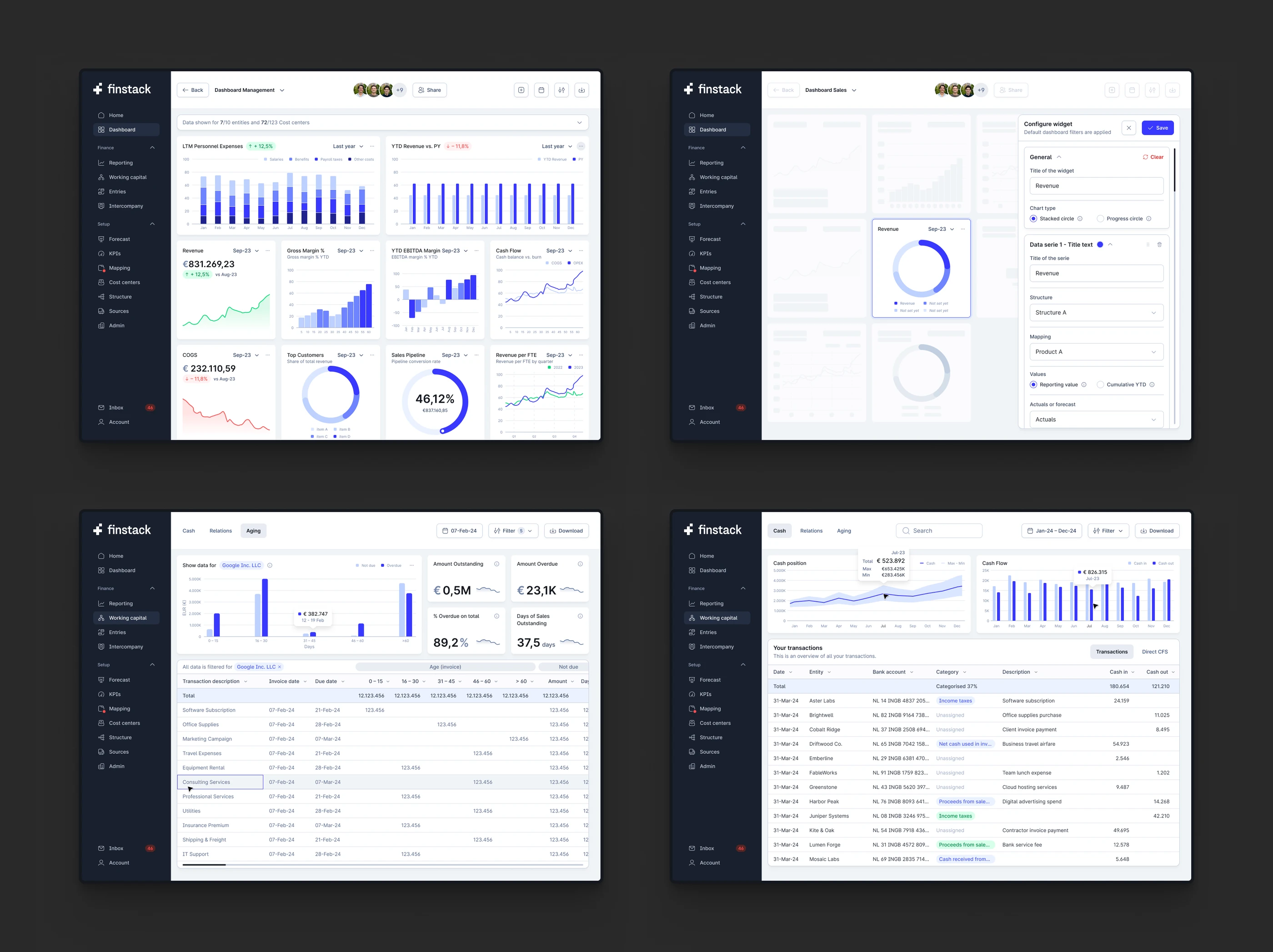
Finstack is a startup that gives finance teams the tools and insights they need to add real value to their organization: consolidation, insights, and forecasting, all in one place. I joined as employee #7 in a Senior/Founding Product Designer role.
The stakes
We had shipped a low-quality product into a conservative market, financial data was still scattered across a dozen tools, and investors wanted results yesterday. I had to fix it, or there wouldn’t be a next round.
Situation
It started as an MVP: a handful of essential, basic features that didn’t add up to much of a story. A rough vision, lots of ambition. Investors kept pouring money in, and traction was forming with a handful of customers, but there was no process to grow on.
Complication
Knowing how to get things done is what keeps you alive at this stage. The founder and CEO used to be a CFO himself: he was our ICP, which should’ve made this easier. But standing between two C-level execs who weren’t aligned meant multiple conflicts. The CTO wanted to redo the architecture and rebuild in Vue3 from scratch, betting on a new foundation to build faster. Users didn’t trust an incomplete product enough to switch, especially when most of them had run their finances in Excel for 25+ years. And investors wanted results before putting in more: not next quarter, yesterday.
Turning point
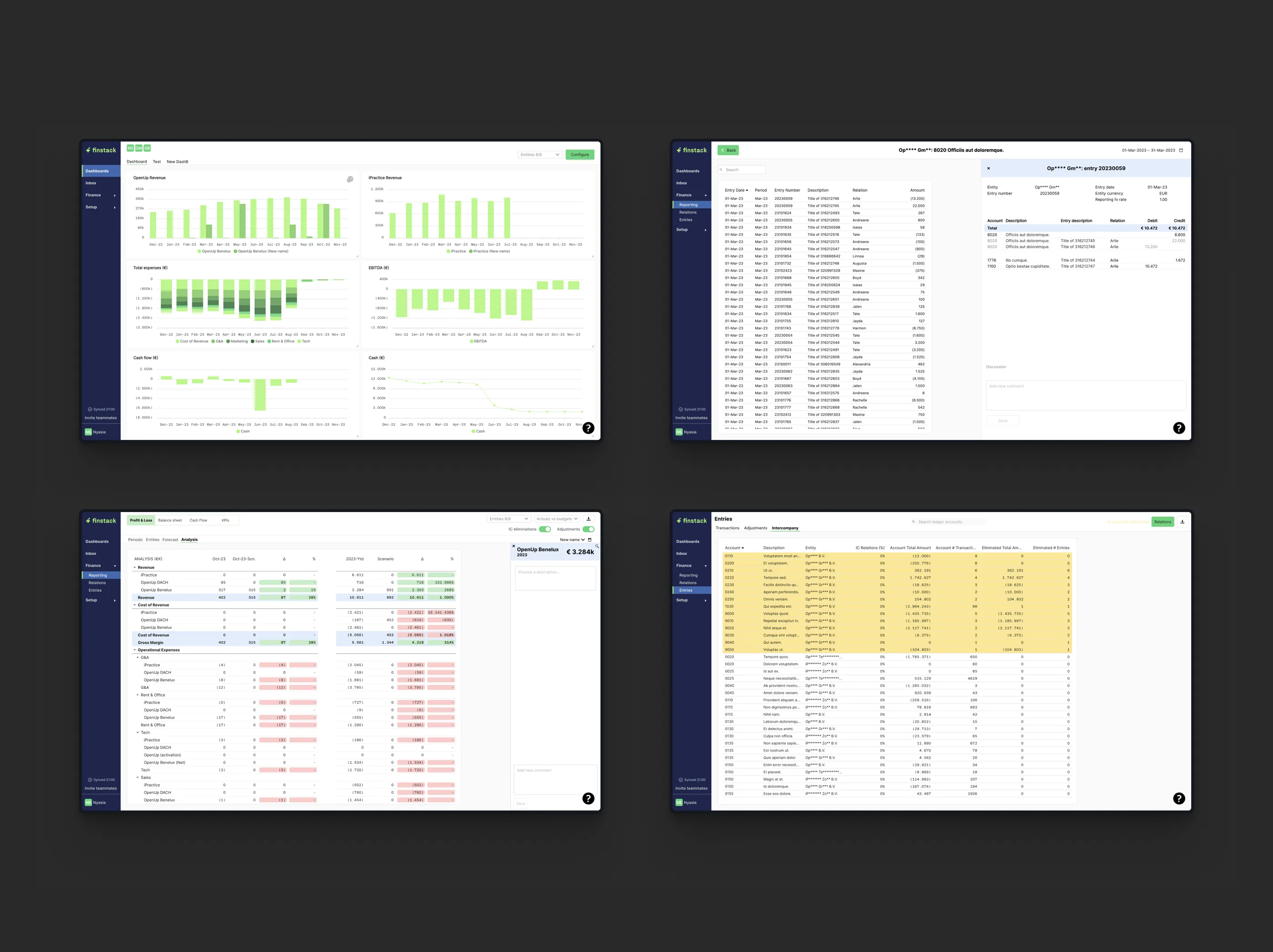
Keep shipping features until the product breaks and customers walk, or stop and rebuild the foundation. Early shortcuts had left nothing to build on, and the CTO saw it too. I made the call within 2 weeks, and together we convinced the CEO: dev moved everything to Vue3 while I designed the new product. Then I led the brand and vision work to get us focused: why we do this, and for who. Vision, ICP, plan, green light from investors: ready to go. Buckle up.
The bet
Fix the foundation first, then win trust. Finance teams that have run on Excel for 25+ years only switch when a product feels complete and reliable. The features that make them rely on us instead of five tools come next.
What I did
- Pulled input from every team member: the struggles, the strengths, across team, company, and customers, then ran workshops to shape the brand and vision around a clear ICP and market position
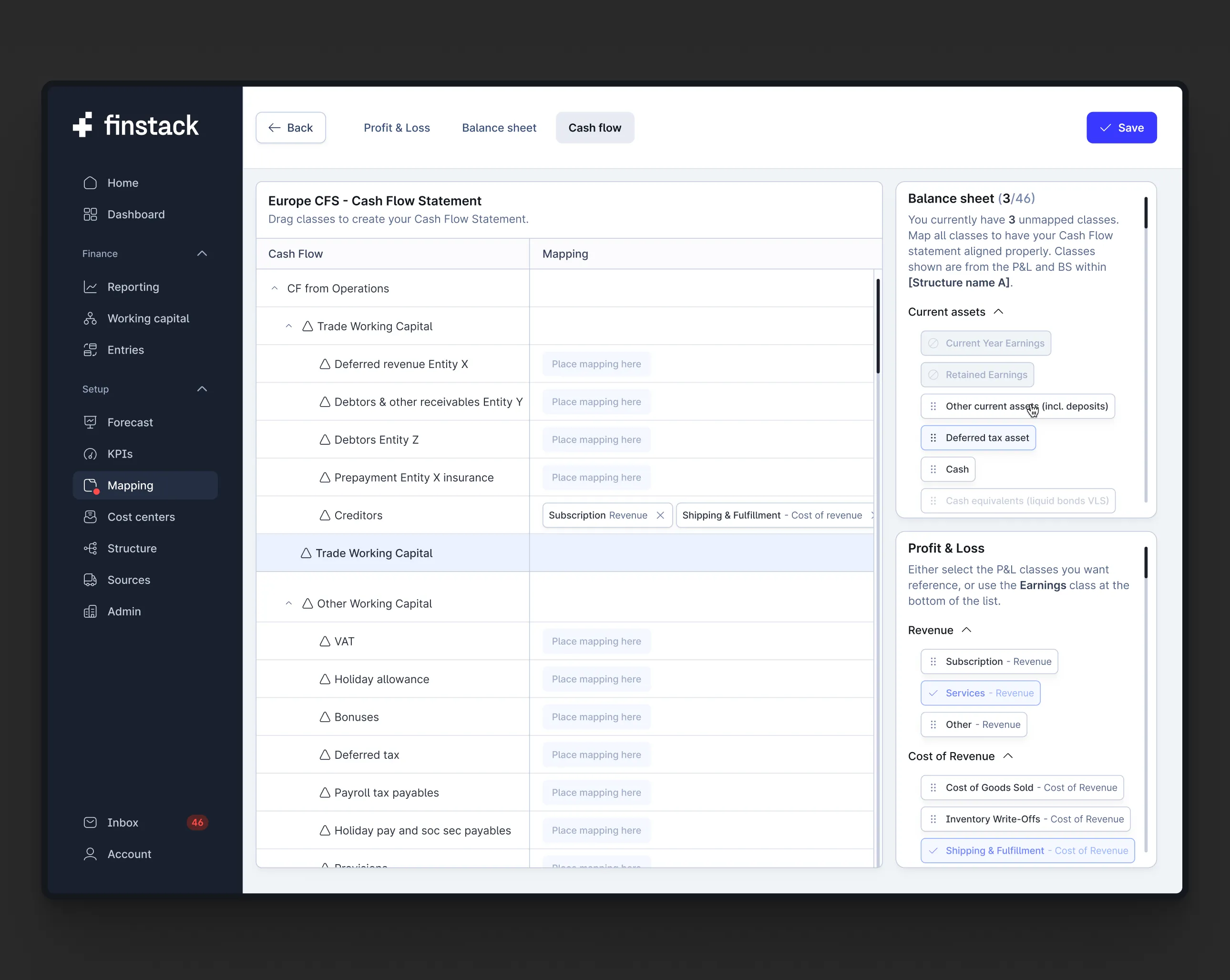
- Worked side-by-side with the CEO and CPO on the roadmap, processes, and execution plan. Pushed strategy on financial planning & forecasting and an investor dashboard for customers’ own stakeholders: the features that made customers rely on us instead of five different tools
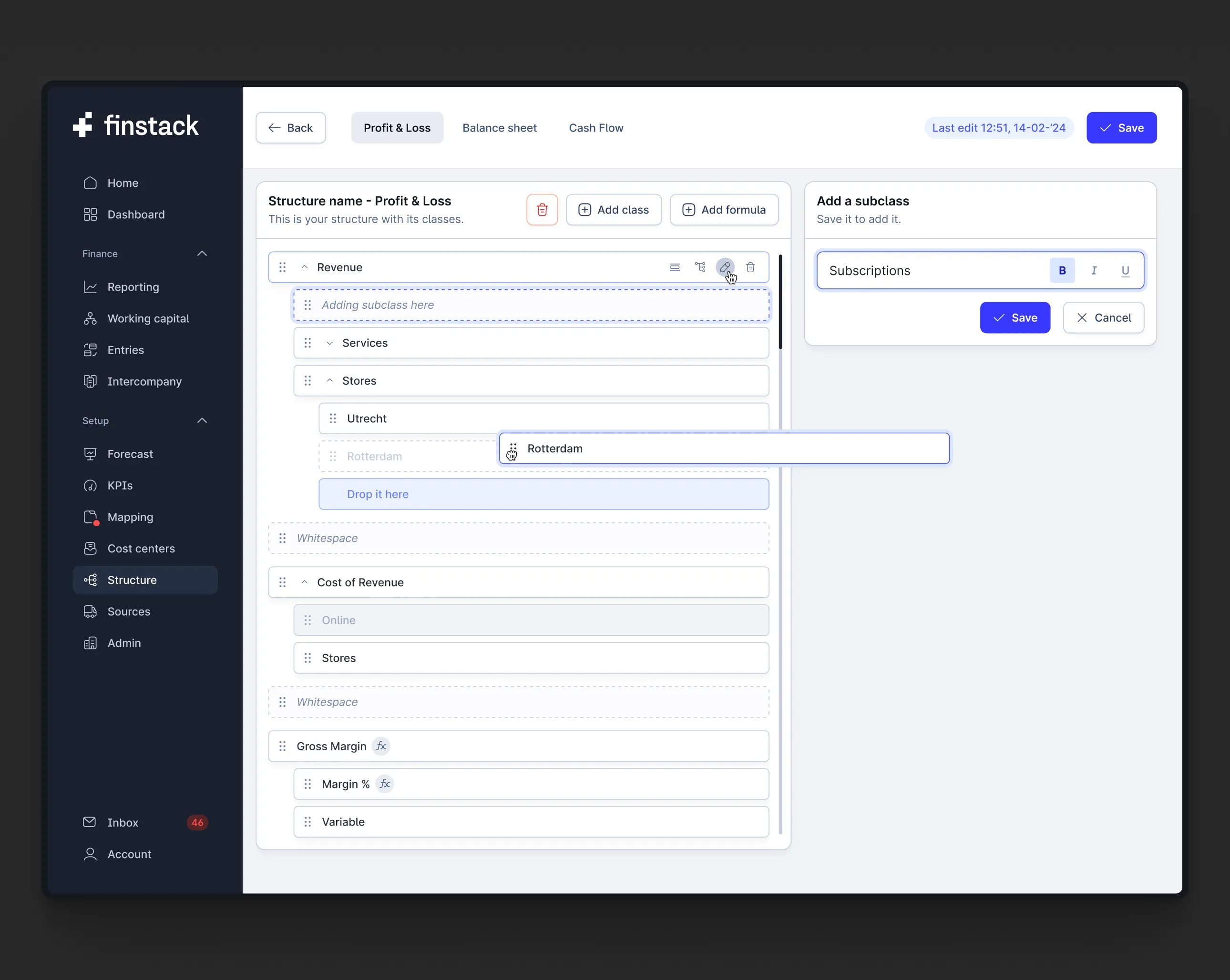
- Built the design system and the processes behind it: feedback in, tickets out, designs ready, so dev could ship fast with no room for error
- Stepped into marketing and sales while the CEO owned it early on: built the visuals and decks, designed the website around why finance teams window-shop for tools but don’t buy until they’re ready, and ran the campaigns with our Marketing Manager that brought customers in
- Grew our dev talent along the way by helping them try, fail, and learn
The work


Impact
- ARR grew from just under €10K to €300K in 2 years: 4x in 2024 and 9x in 2025 alone. Active users went from 15 to over 700 in the same stretch, with companies leaving tools that cost them €100K+ just to set up.
- 350% ROI for customers in their first month.
- Implementation in 1 day: 3x faster than the next best alternative, and months faster than most competitors.
- Customers save 90%+ of the time and cost they used to spend on consolidation: at least 12 hours a month back.
- New website: visitors up 8x, booked demos up 2x: demos turning into signed deals within weeks.
- Dev velocity: a solid feature built and shipped within 1 day, thanks to the design and dev process we built.
Reflection
Pioneering without a reference point means ideas stay stuck in people’s heads longer than they should. Getting them out takes time and a lot of questions.
The clearer lesson: when two C-level execs aren’t aligned, the friction shows up everywhere. My mistake? Both sat above me, so I worked around the tension instead of putting it on the table. I learned to name that tension early, talk it through, and build the process that stops it turning into miscommunication down the line.