WAIR
ARR growth
13x
Ideal-fit customers
40+
Dev velocity
10x+
TL;DR
- Role:
- Head of Design → Chief Design Officer, hands-on IC
- Team:
- Only designer, co-leading ~16 engineers, ML engineers and data scientists with the CPO
- Scope:
- I designed the product and interface layer: how people see, trust and steer what the agents decide. The ML models were built by our ML engineers and data scientists.
- Problem:
- A product built for everybody, which meant nobody, with less than a year of runway to fix it.
- Impact:
-
- ARR 13x in one year, €150K to €2M+
- 12 trial customers to 40+ ideal-fit customers, incl. JD Sports and Steve Madden
- Dev velocity up 10x+, testing an idea takes hours, not weeks
Company
WAIR is a startup that provides lifestyle brands & retailers with digital employees: AI agents that autonomously manage inventory. Less waste, better stock, stronger margins to survive in a tough fashion industry.
The stakes
We built something for everybody, which meant nobody. If I didn’t come up with a cohesive product, we wouldn’t survive another year. Not without more funding, and not if a VC-backed competitor ramps up.
Situation
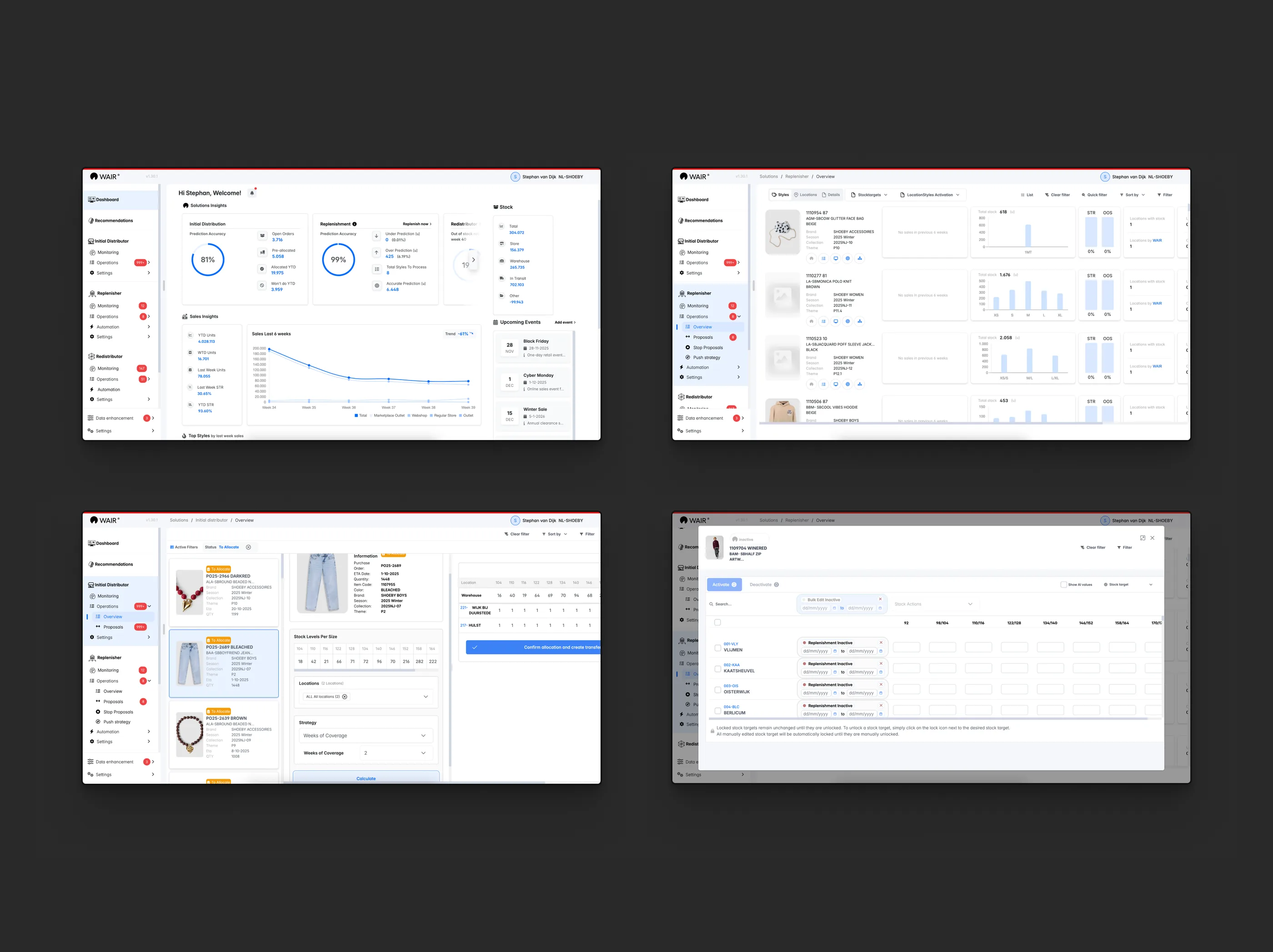
What grew organically by adding features from the start resulted in a glued-together experience with no owner or vision. It worked okay on a shallow level, creating little to no value. Many ideas were there, but no direction to build on.
Complication
Without a vision, nobody knew where to go. The product was built in an unsustainable way, where adding more would result in less (no, less is more does not apply here) due to technical constraints and unhappy customers. Onboarding users who had needs that were too divergent resulted in building everything for everybody, but it didn’t go together. The founder kept investing to keep going. This would not survive another year this way.
Turning point
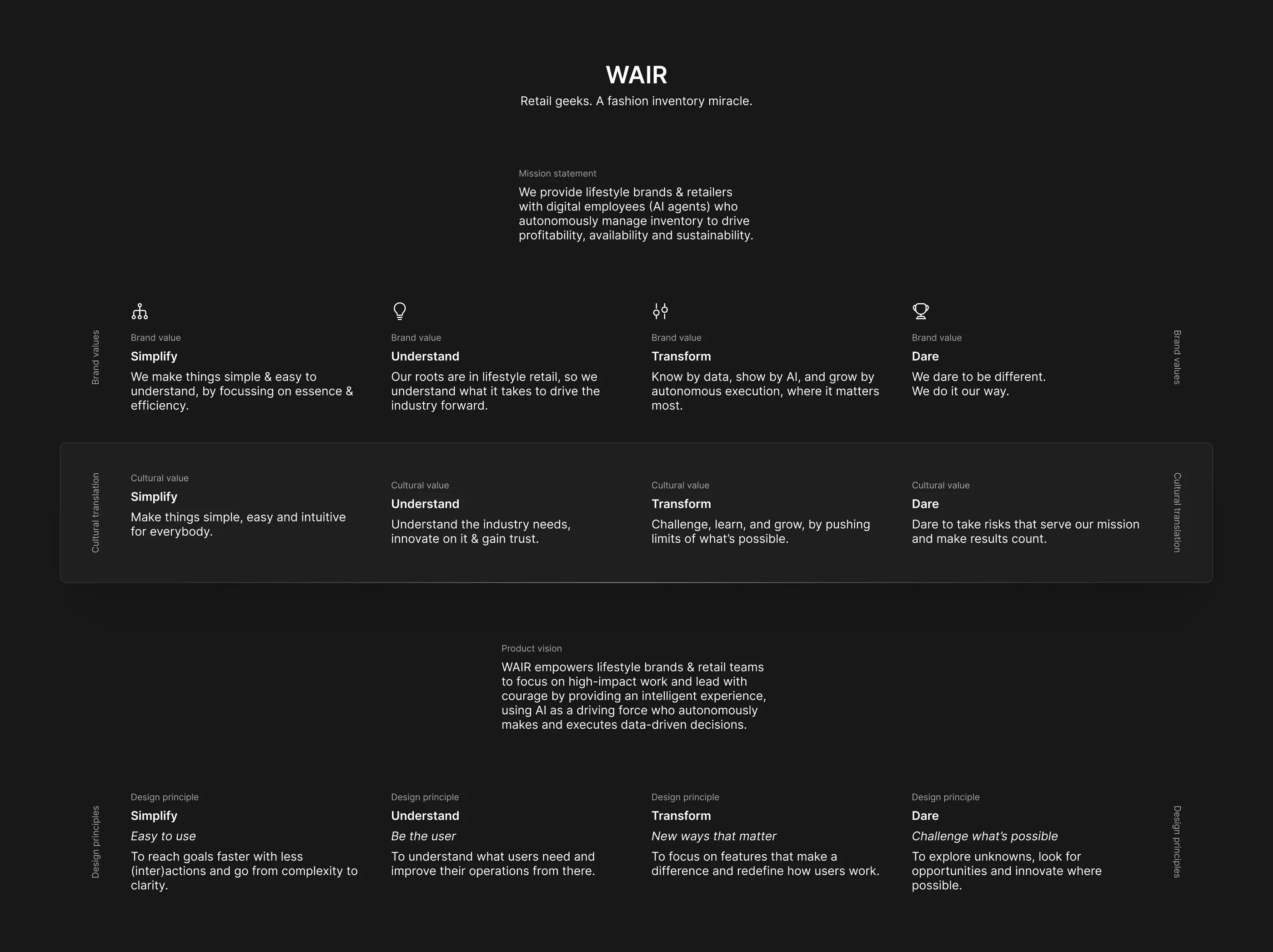
I took input from the team, the founder, CPO and former COO to form a product vision and foundation of the brand. I could follow the safe version trying to satisfy all users like we always did, or bet on a new vision and design the foundation to start developing in the right direction. I chose the second. Within the first 6 weeks I built a brand model: mission statement, brand values, cultural values (what those values mean for our own team), product vision and design principles. C-level’s biggest doubt was how to move forward and what to pick up first. There was too much chaos and no structure: we kept putting out small fires, and nobody had time for the bigger picture. The brand model gave us that structure. From there, the build started.
The bet
Niche down and add a lot of value for a smaller group of customers, instead of keeping it shallow for everybody. Customers pay for value, not for features. The target we set: 100% YoY ARR growth.
What I did
- Built the vision, mission, brand values, and design principles from scratch, then worked side-by-side with the CPO to nail down what customers and our own team actually needed
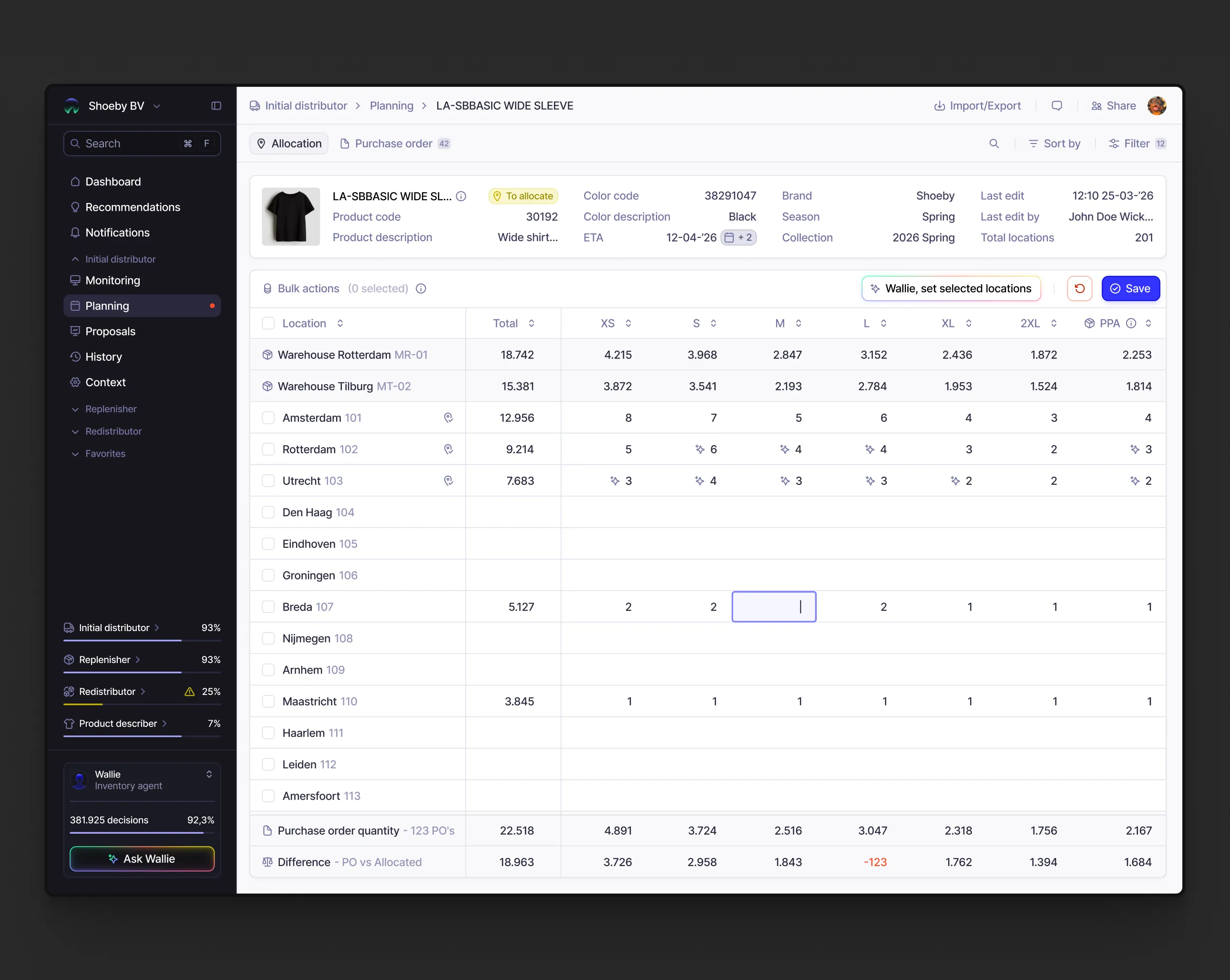
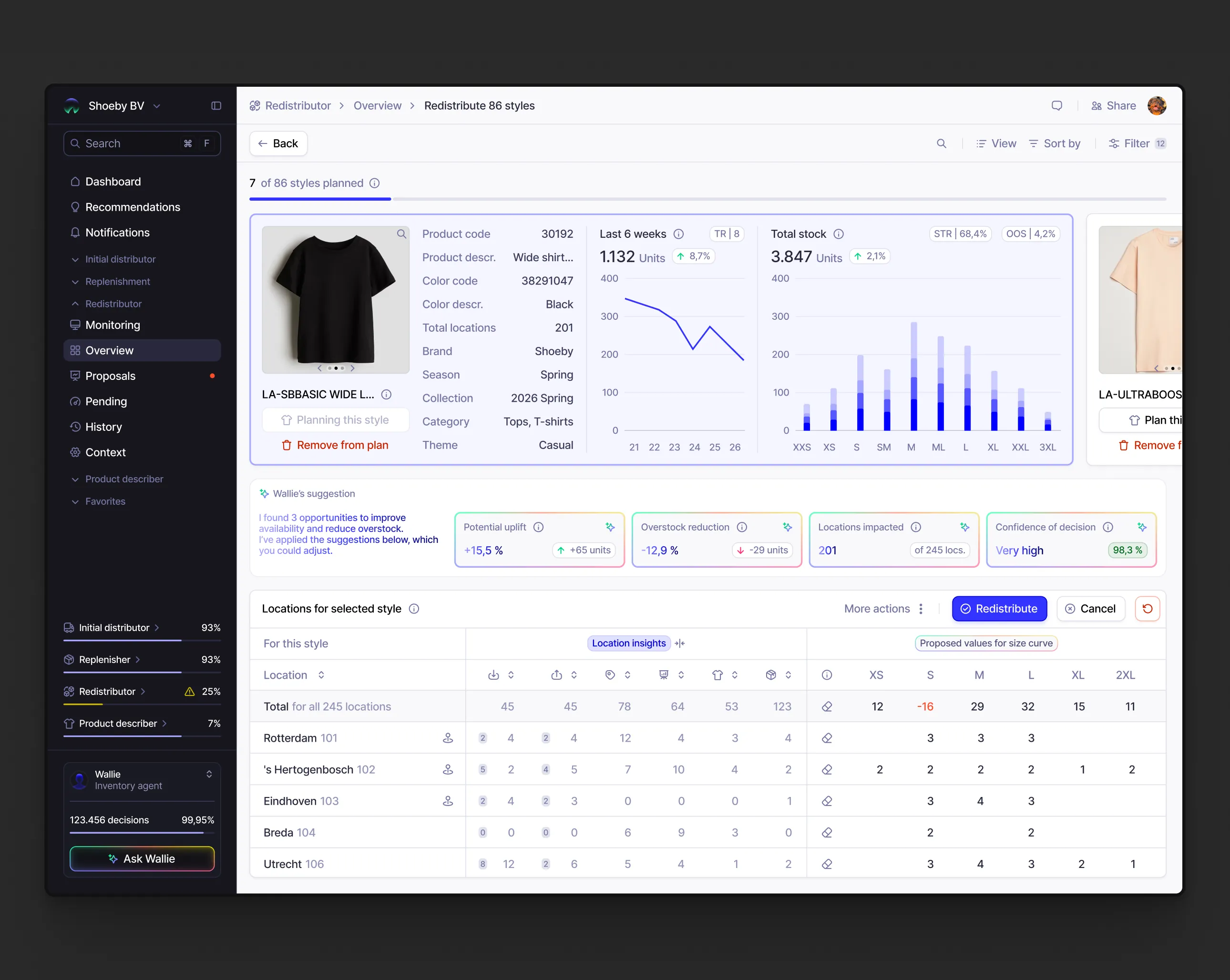
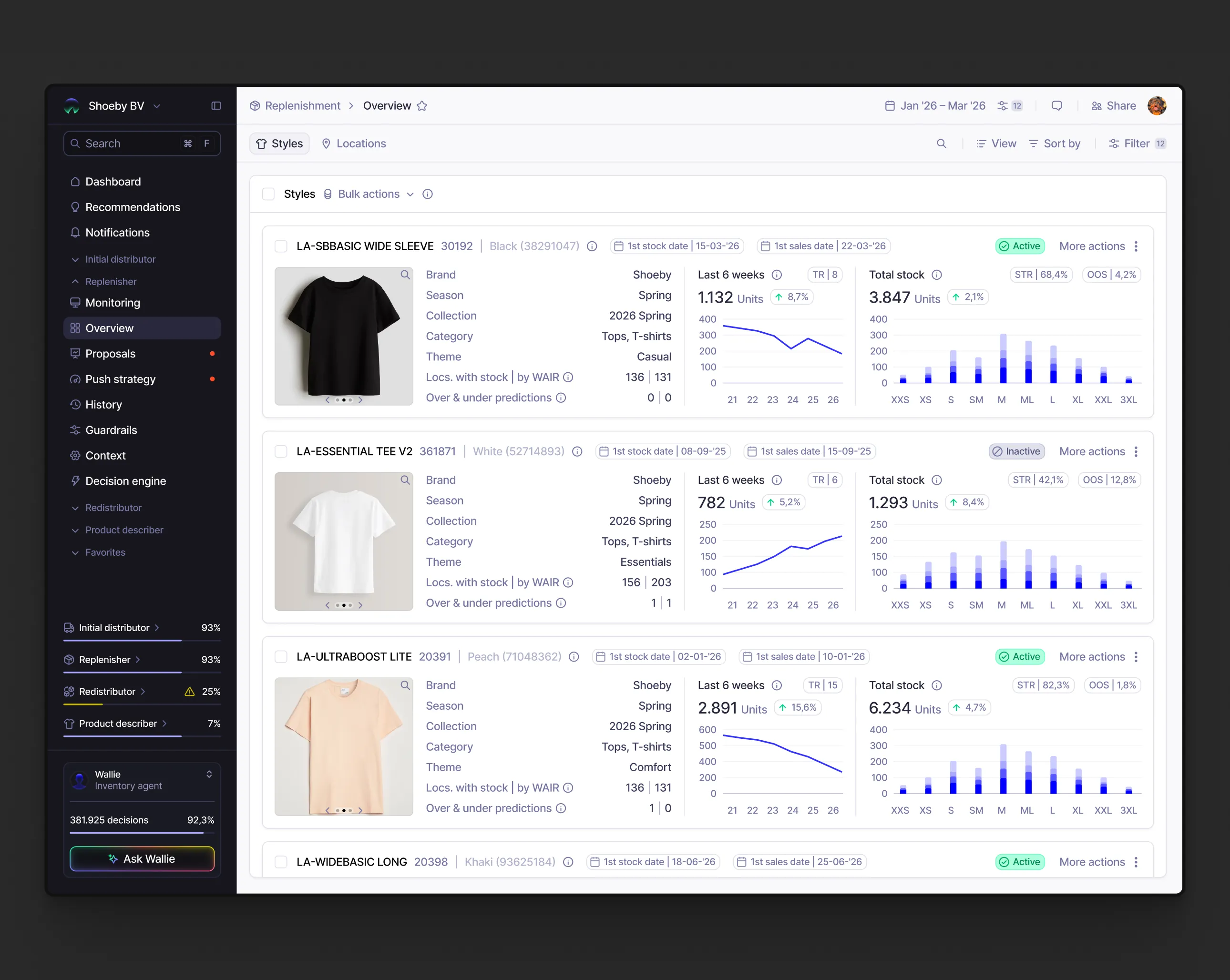
- Turned “everything for everybody” into themes: distinct agents, each visually different, each with its own goal, instead of one glued-together product
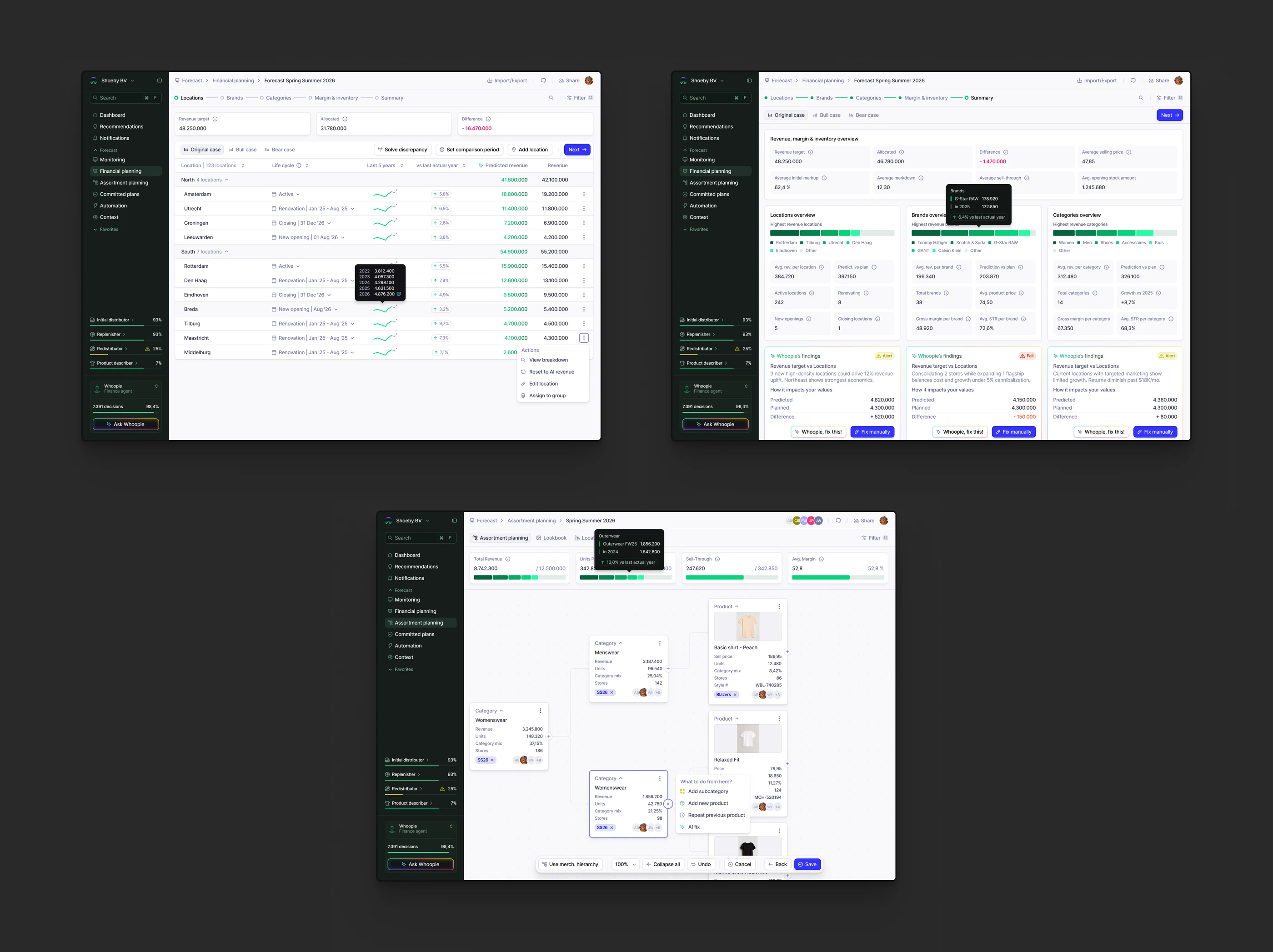
- Set up a new financial & merchandise planning product with our engineering architect, sharpening the vision from in-season only to full-season and covering way more market
- Pushed C-level on market positioning: what to focus on, what to kill before it killed us, and bridged customer success, ML, dev, and leadership so feedback, shipping, and revenue moved together
- Built a design system connected to Figma MCP, Cursor and Claude, so designs go from Figma to working code in hours instead of weeks and one designer keeps pace with the whole team
The work
Why it works
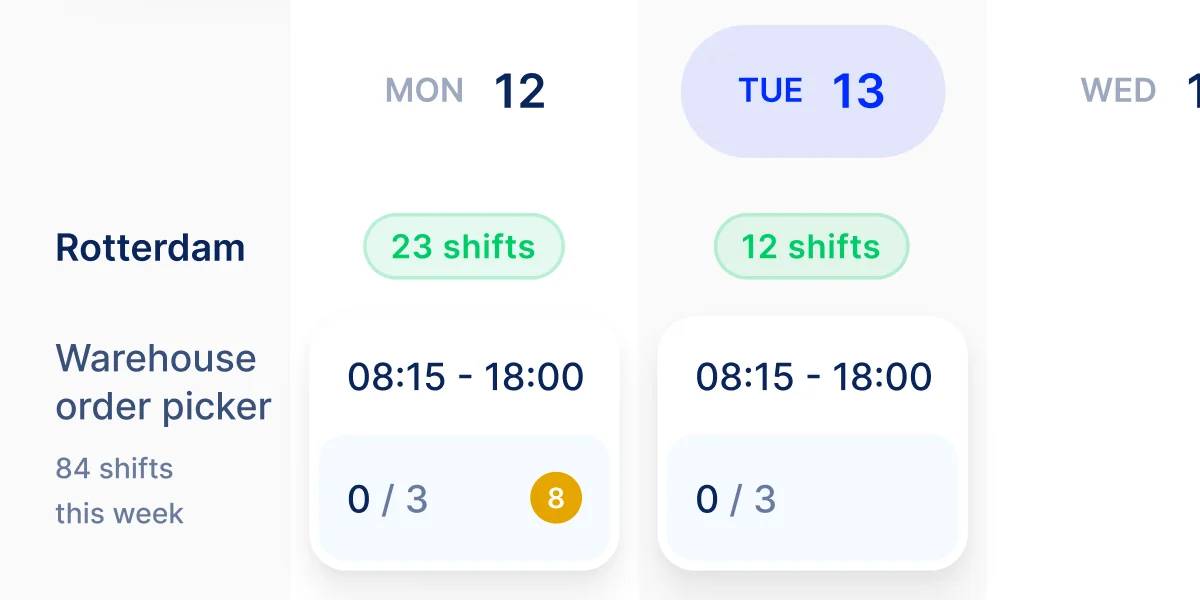
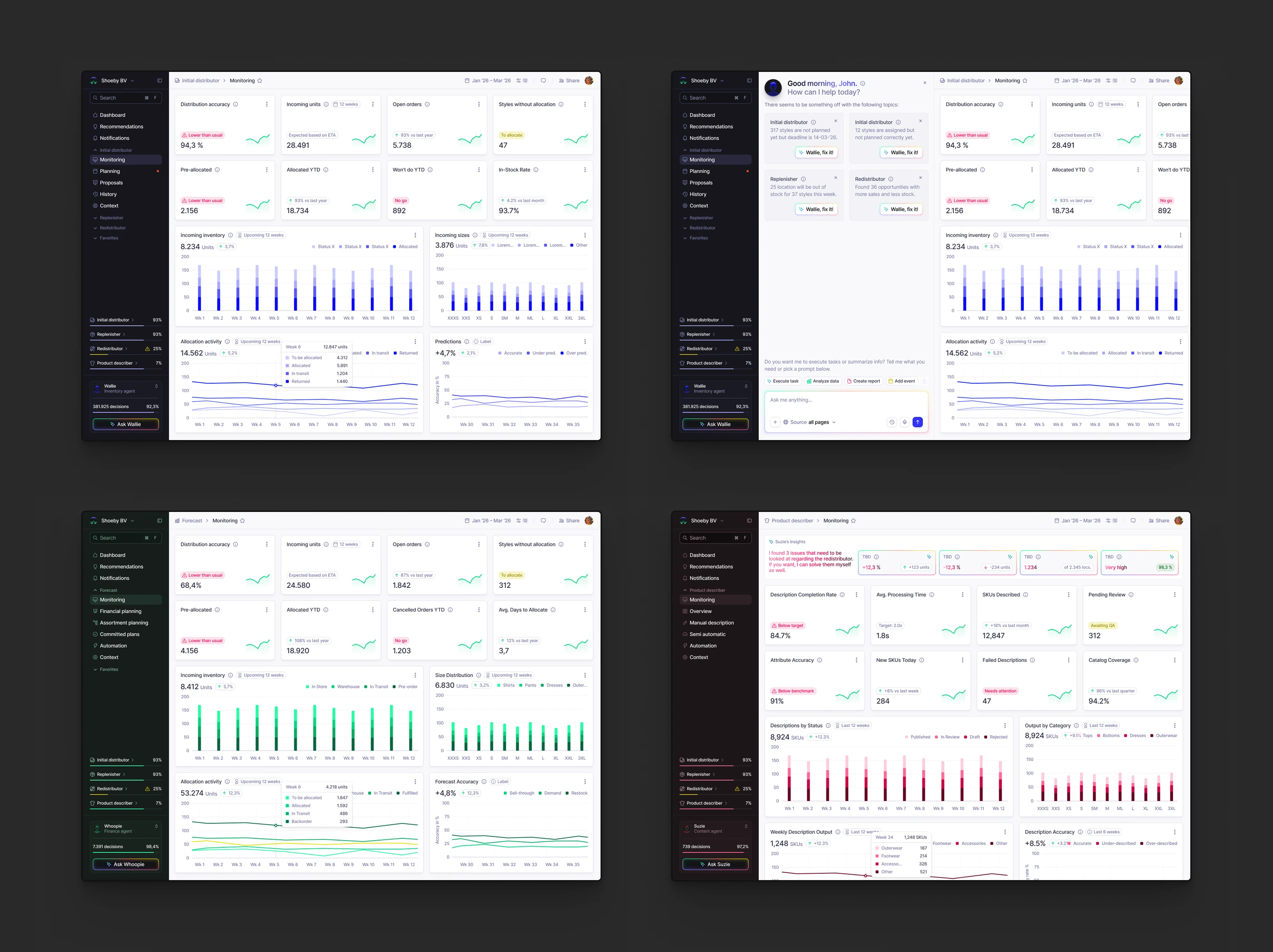
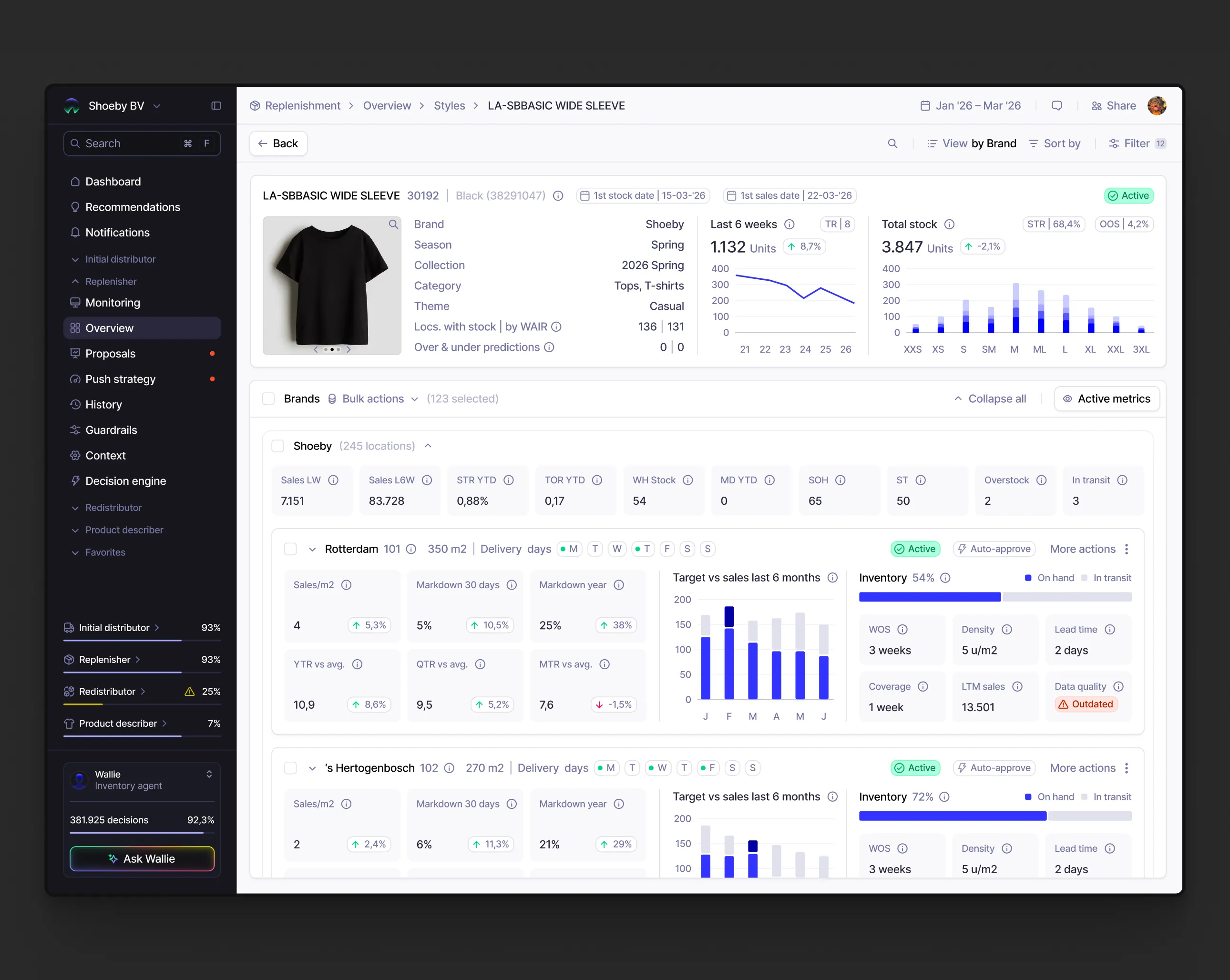
- One look and name per agent. Each owns a different step, so you see at a glance who does what.
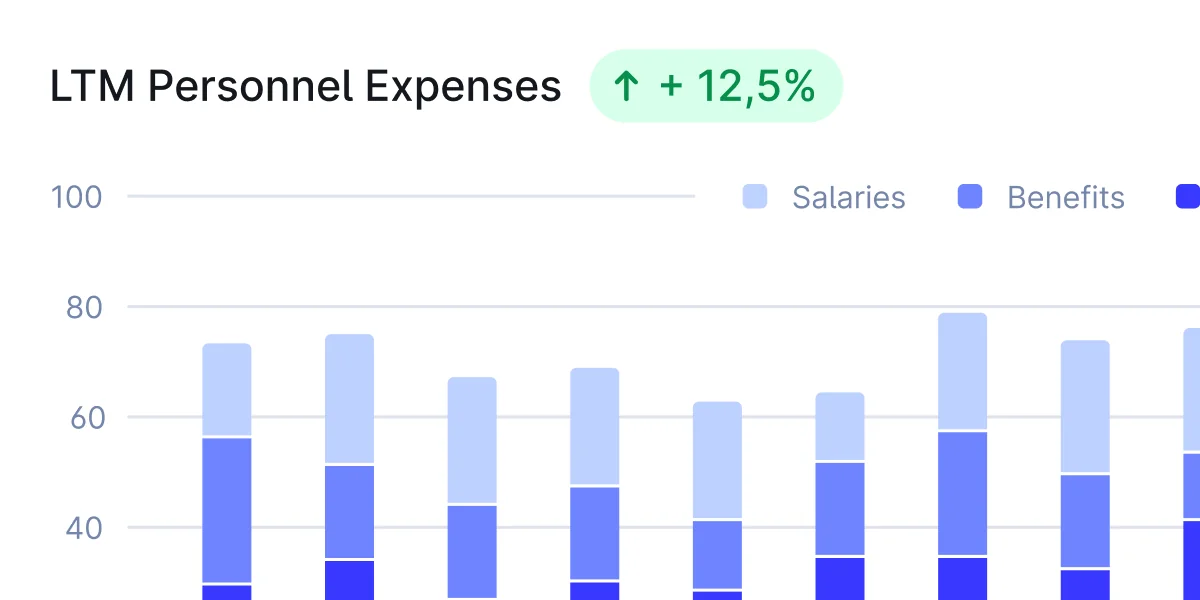
- Health at a glance. Log in, see all is on track, log out with peace of mind.
- Decisions you can trust. How many calls the agents made on their own, and how accurate.
Impact
- ARR grew from €150K to just over €2M in a year: 13x, way past the 100% YoY target we set.
- ACV up 50%+, by upselling higher-value features and covering more market.
- 12 trial customers to 40+ ICP customers in a year, including JD Sports and Steve Madden.
- Customer margin up at least 1%: the difference between losing money on discounts and making margin at full price, in a fashion industry that’s brutal to survive in.
- Dev velocity up 10x+: testing a new idea now takes hours, not weeks.
- Understandable product, less support: users know where things are and what to do next, as agents point out what to change for better results. Faster onboarding in the portal, and a product that’s easier to sell due to its results and appearance.
Reflection
Wanting to build fast is good. Too fast isn’t. Some mistakes were avoidable: we pushed complexity out of scope for V1 into V2, only to find out later we could’ve shipped it in V1 if we’d looped in the right people from the start instead of trying to spare their time. Miscommunication and missing context will kill you slowly: better to align once too often than not enough.